
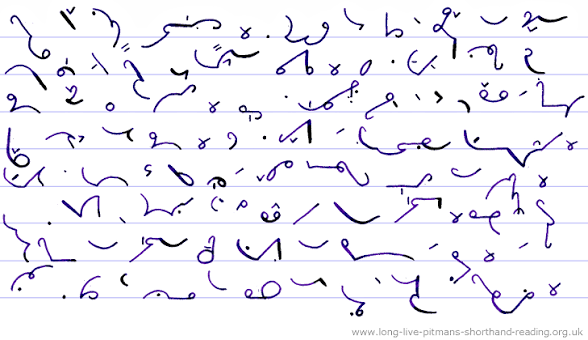
At its core, shorthand is a stylized, symbolic writing method designed to increase writing speed. Instead of the standard letters and words we use in longhand, shorthand employs a set of abbreviated characters or symbols to represent words, phrases, and even entire sounds (phonetics). This allows proficient writers to record information at a rate far exceeding that of traditional writing, often reaching speeds that match or even surpass spoken speech.
A Journey Through Time: The History of Shorthand
The roots of shorthand can be traced back to ancient civilizations. The Greeks and Romans developed early forms of abbreviated writing to document speeches and legal proceedings. However, the modern shorthand systems we recognize today began to emerge in the 16th and 17th centuries in Europe.
- Early Systems: Inventors like Timothy Bright and John Willis created systems that, while innovative for their time, were often complex and difficult to learn.
- The Rise of Isaac Pitman: In 1837, Isaac Pitman revolutionized shorthand with his system based on phonetic principles. His method, known as “Stenographic Sound-Hand,” used simple lines and curves to represent consonant sounds, with vowels indicated by dots and dashes. Pitman’s system became incredibly popular in the English-speaking world.
- The Contribution of John Robert Gregg: In 1888, John Robert Gregg introduced a rival system that focused on a more cursive approach. Gregg shorthand was based on the movements of a pen, making it visually more similar to connected handwriting. This system gained immense popularity, particularly in the United States.
The Anatomy of Shorthand: How it Works
Shorthand systems achieve their remarkable speed through several key principles:
- Phonetics: Most modern shorthand systems are phonetic, meaning they represent the sounds of words rather than their traditional spelling. This simplifies the writing process, as single symbols can represent multiple sounds or common sound clusters.
- Symbols and Characters: Shorthand uses a specific alphabet of symbols, which can include straight lines, curves, loops, and dots. The specific meaning of a symbol often depends on its length, angle, thickness, and position relative to other symbols.
- Abbreviation: Shorthand heavily relies on abbreviations for common words and phrases. Short forms, often consisting of just one or two characters, can represent frequently used words like “the,” “and,” “that,” “with,” etc.
- Phrasing: Related words are often written close together or connected to further speed up the writing process.
The Enduring Relevance: Why Learn Shorthand Today?
In a world where smartphones and laptops are ubiquitous, one might ask, “Why bother with shorthand?” The answer lies in the unique advantages that digital devices simply cannot replicate:
1. Unmatched Speed and Accuracy:
A skilled shorthand writer can capture information at speeds ranging from 100 to over 200 words per minute. This is invaluable in situations where speed and accuracy are paramount, such as:
- Court Reporting: Ensuring verbatim records of legal proceedings.
- Journalism: Capturing quotes, interviews, and press conferences in real-time.
- Meeting Transcription: Accurately recording discussions and decisions.
- Academic Lectures: Taking detailed notes without missing crucial information.
2. Focus and Immersion:
Typing can be distracting, as the visual of the screen and the physical act of typing can pull your focus away from the speaker. Shorthand, on the other hand, allows you to remain fully present, listening intently and translating information directly through your hand. This often leads to better comprehension and retention.
3. Privacy and Discretion:
In confidential meetings or interviews, typing notes can be intrusive and disruptive. Shorthand offers a discreet and private way to capture information without drawing attention.
4. Reliability and Independence:
Unlike digital devices, shorthand doesn’t require batteries, Wi-Fi, or software updates. A simple notebook and pen are all you need, ensuring you’re never caught off guard in an environment without power or connectivity.
5. Cognitive Benefits:
Learning shorthand is a mental workout. It challenges your brain to process information phonetically, memorize intricate symbols, and develop rapid hand-eye coordination. Studies suggest that learning such specialized skills can improve memory, focus, and overall cognitive function.
Choosing Your Path: Pitman vs. Gregg
While many shorthand systems exist, Pitman and Gregg remain the most prominent and widely used. The best system for you often depends on personal preference and learning style:
- Pitman Shorthand:
- Pros: Known for its precision and potential for very high speeds. Its phonetic basis makes it accurate for complex vocabulary.
- Cons: Can be more challenging to learn initially due to the distinct differences in stroke thickness (shading). It often requires a specific type of pen.
- Gregg Shorthand:
- Pros: Generally considered easier to learn due to its cursive-like strokes. It uses a uniform stroke thickness, making it more adaptable to different writing instruments.
- Cons: Some argue it might be slightly less precise at extreme speeds compared to Pitman, although it still allows for remarkable velocity.
How to Start Your Shorthand Journey
Embarking on the journey to master shorthand is an exciting and rewarding endeavor. Here are some steps to get you started:
1. Research and Choose a System:
Explore the basics of both Pitman and Gregg. Look at sample scripts and introductory materials to see which system resonates with you. Many online resources and introductory videos can help you make an informed decision.
2. Gather Your Tools:
Depending on the system you choose, you’ll need the appropriate writing materials:
- For Pitman: Specific Pitman pens (or pencils) with a slightly flexible nib to achieve the varying stroke thicknesses are ideal. Pitman-ruled paper, with its distinct lines for positioning symbols, is also highly recommended.
- For Gregg: A smooth-flowing pen (like a good ballpoint or fountain pen) and standard lined paper are generally sufficient.
3. Find Quality Learning Resources:
This is where the right guidance can make a significant difference. While you can try self-teaching through books, enrolling in a structured course often provides the consistency, expert feedback, and supportive community needed to succeed.
Ready to Master Shorthand? Take the First Step!
If you’re inspired by the potential of shorthand to transform your note-taking, improve your professional accuracy, and give you a unique competitive edge, we invite you to explore our comprehensive shorthand courses. Whether you’re a complete beginner or looking to refine your skills, we have a program designed for you.
Enroll in Our Shorthand Course
Our expert-led courses cover both Pitman and Gregg systems, providing you with the essential knowledge, practical drills, and personalized feedback to achieve speed and proficiency.
Don’t let this valuable skill slip through your fingers. Invest in yourself and unlock a world of enhanced communication and productivity.
Click Here to Enroll and Start Your Journey: https://stenospeed.online/enroll/
Conclusion
In conclusion, while the digital world offers numerous communication tools, shorthand remains a unique and highly effective skill for capturing information with unparalleled speed, accuracy, and discretion. From the courtroom to the newsroom, and from the lecture hall to the boardroom, the ability to write at the speed of speech is a powerful asset. By understanding the principles of shorthand, choosing the system that’s right for you, and investing in dedicated practice through structured learning, you can unlock this timeless skill and reap its benefits for years to come.
Leave a Reply